

Building a community of people who care about improving palliative care research together
Kasia Patynowska is an awardee of doctoral funding from Health and Social Care Research & Development (HSC R&D), Public Health Agency. An Ulster University PhD Researcher, her research centres on development of workplace peer support intervention for healthcare assistants delivering palliative care in the community.
Graduating in nursing in 2007, Kasia came to Northern Ireland (NI) that same year, working firstly as a Healthcare Assistant in a private residential home in Belfast. Following this, she was a Nurse in nursing homes and hospitals, until finally starting work as a Nurse in Marie Curie in 2010. Her Research Nurse journey began in 2021 when she was offered a part-time secondment into the role.
About her research journey, Kasia said: “I was always interested in research but I felt I didn’t have a way in and I didn’t know how to get involved in research.”
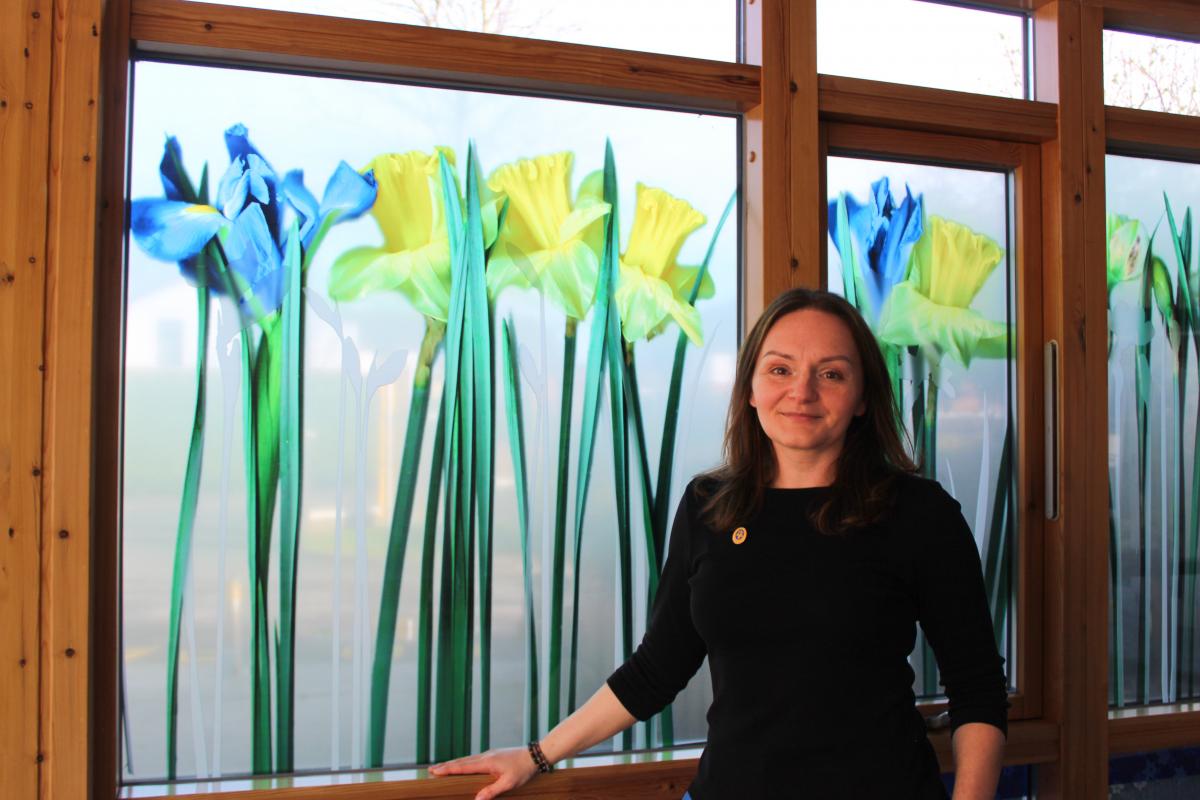 Photo: Rioghnach McGuinness-McCay
Marie Curie, an organisation known for cultivating a research culture, established permanent Research Nurse positions, with five research nurses currently working across the UK. The Research Nurses are supported by academic mentors and act as research champions embedded within local hospice and community-based teams.
Why choose to work and study palliative care? Kasia’s answer is easy. Her Grandfather died in a hospital alone when she was a first-year nursing student in Poland. She explains her family didn’t know about palliative care and what to do for him. “This left a mark on me. I knew with the right support this experience could be very different for many people.”
That experience has shaped her nursing journey – and now drives a research programme that could transform how we support the frontline workforce delivering palliative care in the community.
Kasia started working on small research projects funded by Marie Curie and building on her research capacity. In 2019, a Senior Research Fellow – Dr Tracey McConnell - joined Marie Curie and paired with Kasia to develop research and practice development sessions for staff. In summer 2020, Dr McConnell asked Kasia to work on a small research project under Tracey’s supervision. Kasia says: “Tracey is so important to my journey as she has been with me every step of the way. She’s been my mentor at Marie Curie and is now my PhD Supervisor.”
Kasia feels incredibly fortunate to have strong mentors supporting her. Professor Sonja McIlfatrick was instrumental in encouraging her to apply for the doctoral fellowship and is now her supervisor. Dr Felicity Hasson from Ulster University,
has extensive research expertise in this area, and has been the expert academic lead on Kasia’s projects from 2020.
Kasia explains: “The guidance of my three supervisors has shaped how I think and work as a researcher. I have a supervisory team that has believed in me and this work from the start. Strong mentorship has been crucial for my development as a researcher — I wouldn't be where I am today without people who saw potential in me and gave me the opportunity to grow. And there are too many wonderful people to name!”
Kasia led on two research projects exploring wellbeing and support needs of lone working healthcare assistants providing hospice care at home under the expert supervision of Dr Felicity Hasson. Having lived experience in this area, Kasia felt more could be done to assist Healthcare Assistants. “They are key frontline workers who deliver most of the hands-on care in patients’ homes, managing complex emotional and clinical demands, but they are often invisible and undervalued. They don’t have recognition they deserve.”
A 2023 qualitative study published in Palliative Medicine explores the experiences of newly employed lone working Healthcare Assistants (HCAs) providing 24/7 palliative care in the community.
Acknowledging a Healthcare Assistant role is utmost to Kasia: “I’d like the complexity of the Healthcare Assistant role to be recognised. Often they are called sitters and there’s a perception they just sit all night but they provide truly holistic care, emotional support for families, informally they are taking part in Advance Care Planning conversations but this is not recognised.”
Her further research was focussed on wellbeing of lone working Healthcare Assistants and its impact on staff retention in hospice care at home services: Workplace support, wellbeing and intention to leave among lone working healthcare assistants providing palliative and end-of-life care in the community: A mixed methods study (2026)
The findings were clear: Healthcare Assistants working alone in patients’ homes face significant isolation, with a lack of connection between workers. This evidence base directly informed Kasia’s doctoral research. Funded by HSC R&D, Kasia’s doctoral study at Ulster University aims to co-develop a workplace peer support intervention for Healthcare Assistants providing palliative and end-of-life care in the community. Supervised by Professor Sonja McIlfatrick, Dr Felicity Hasson and Dr Tracey McConnell, the study uses a realist approach to explore what works, for whom and in what circumstances.
Project website: Peer Support for Healthcare Assistants - The Palliative Hub Professional
Kasia has been involved in many research projects including mapping palliative care and heart failure service provision in NI, hospice staff support in Scotland and a school bereavement programme in NI. She is also a steering committee member for an Early Career Research Forum. Describing her research experience, she explains: “Being involved in research has been incredible. Each project teaches me something new, but more importantly, it means I can bring that learning back to support colleagues, to strengthen other studies, and to build a community of people who care about improving palliative care together.”
In 2024, Kasia and the Marie Curie Research Nurses won the Clinical Research Nursing category at the Nursing Times Awards. They were recognised for their role in promoting improvements in palliative and end-of-life care by creating a positive research culture in hospices. The role of hospice research nurses in promoting palliative care research | Nursing Times
She said: “Research challenges my thinking in ways nothing else does, and if that challenge leads to even a small positive difference in other people's experiences, then it is worth it!”
“Northern Ireland has a real strength in collaborative palliative care research. But we need more of it to make continuous meaningful improvements, and we need palliative care to be part of everyday public conversation”.